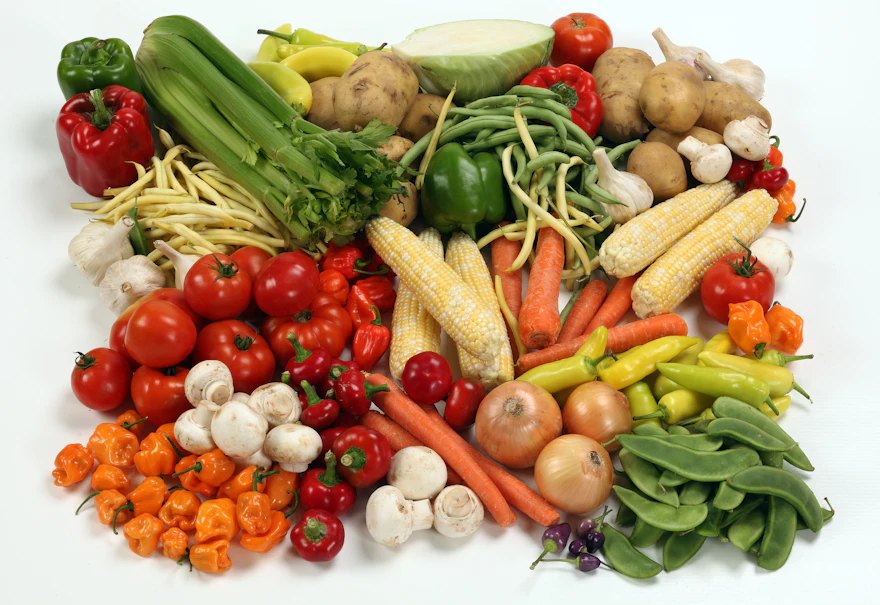
One of the simplest ways to improve your diet is to add more color. Fruits and vegetables get their bright shades from natural plant compounds, and each color group offers its own set of vitamins, minerals and antioxidants. Eating a variety of colors helps your body get a wide range of the nutrients it needs to thrive.
What each color offers
- Red — tomatoes, strawberries and red peppers support heart health and protect cells.
- Orange and yellow — carrots, sweet potatoes and citrus provide nutrients for healthy skin, eyes and immunity.
- Green — spinach, broccoli and kale deliver fiber, folate and minerals that support energy and bone health.
- Blue and purple — blueberries, plums and red cabbage contain antioxidants linked to brain and heart health.
- White and tan — garlic, onions and mushrooms offer compounds that support immune function.
Easy ways to add more color
Toss berries into your morning oats or yogurt, add a handful of leafy greens to soups and sandwiches, and keep sliced peppers and carrots ready for snacks. Try to include at least two or three colors at every meal.
A colorful plate is one of the easiest signs that you're nourishing your body well.
Fresh, frozen or canned?
All can be healthy choices. Frozen fruits and vegetables are often picked at peak ripeness, and canned options are convenient — just look for those without added sugar or excess salt.
Make it a family habit
Invite children to pick a new fruit or vegetable at the market or help wash and prepare produce. Making colorful eating fun helps build healthy habits for life.
This article is for general education only. If you have specific dietary needs or medical conditions, please seek personalized nutrition advice.